Removing a tree is rarely a simple matter of cutting it down. In a densely built city like Manchester, NH, a single mature oak or towering white pine can weigh several tons, stand within feet of a house, and share the same airspace as power lines, fences, and neighboring rooftops. Getting that tree safely to the ground and off the property requires planning, the right equipment, and a crew that understands how trees behave under stress. That is the work we handle every day at 603 Yard & Tree Service LLC, a tree service company serving Manchester, NH.
When Tree Removal Becomes Necessary
Not every tree needs to come down, and one of the first things we assess is whether removal is truly the best option or whether pruning, cabling, or treatment could preserve the tree instead. That said, there are clear situations where removal is the responsible choice. Dead and dying trees pose a falling hazard that only grows worse with time. Trees leaning dangerously after a storm, those with significant root rot, and specimens whose trunks show large cavities or extensive fungal growth all represent real risks to people and structures.
We also remove healthy trees when they simply no longer fit the property. A pine planted too close to a foundation decades ago can crack a driveway or threaten a septic system. Trees that block new construction, shade out a garden, or drop constant debris into a pool are common reasons Manchester homeowners call us. Whatever the situation, our goal is to give you an honest evaluation so you understand exactly why removal is or is not warranted before any work begins.
Our Tree Removal Process, Step by Step
Every removal starts with an on-site assessment of the tree, its surroundings, and the obstacles that make the job either straightforward or complex. We identify drop zones, evaluate the lean of the trunk, note the location of utilities, and determine whether the tree can be felled in one piece or must be dismantled from the top down. This planning stage is where safety is won or lost, and we never skip it.
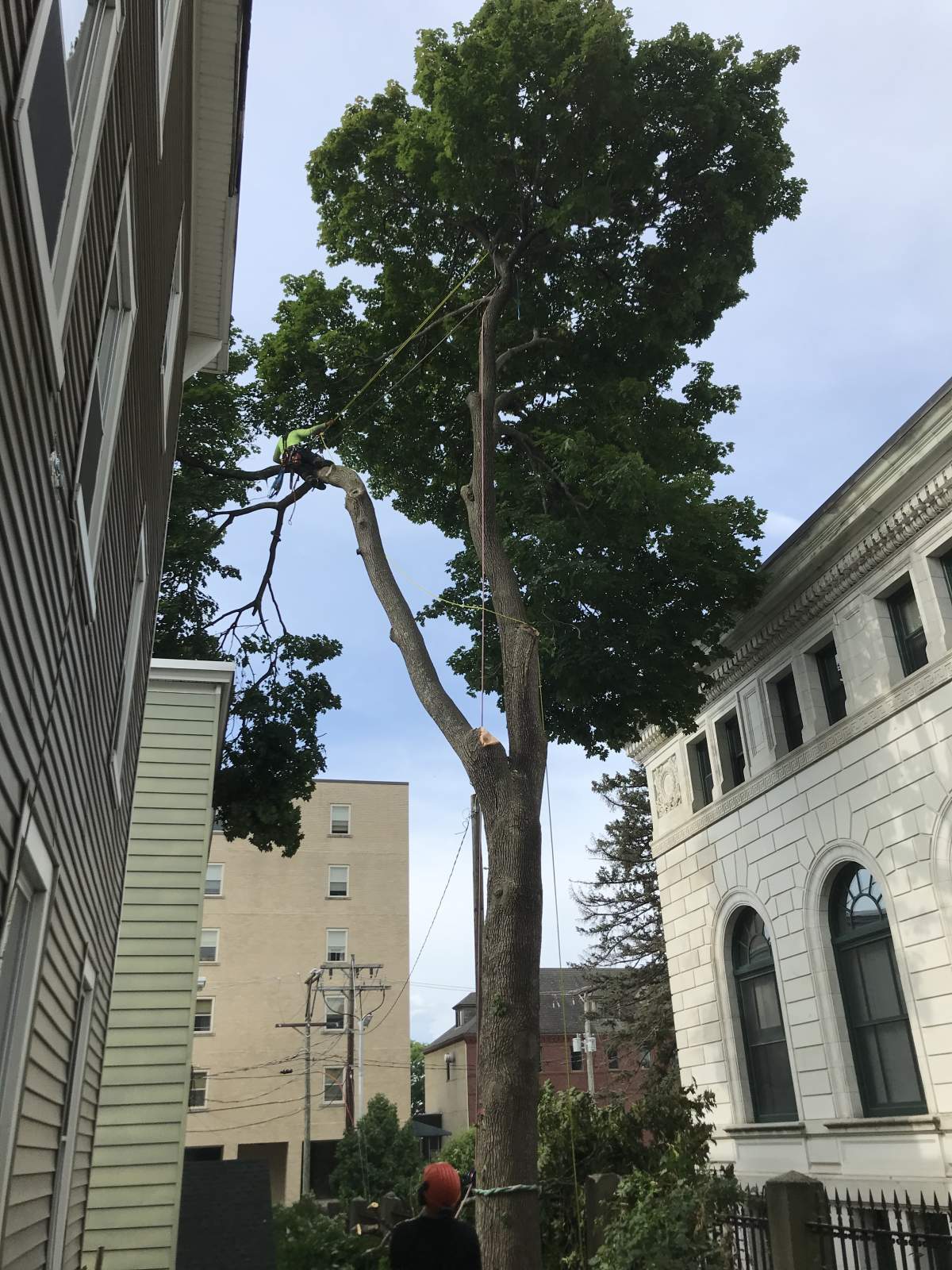
For trees with room to fall, directional felling is often the fastest method. We use precise notch cuts and back cuts to control the direction of the fall, sometimes assisted by ropes or wedges. In tighter spaces, our crews perform sectional dismantling, climbing the tree or using an aerial lift to remove limbs and trunk sections piece by piece, lowering each with rigging lines to protect what is below. The following outlines the core phases of a typical removal we perform:
- Site evaluation: Inspecting the tree’s condition, lean, and proximity to structures, then mapping safe drop zones and escape routes for the crew.
- Preparation and protection: Clearing the work area, laying down protection for lawns and hardscapes, and coordinating around utilities.
- Controlled takedown: Felling the tree whole or dismantling it in sections using climbing gear, rigging, or an aerial lift depending on the setting.
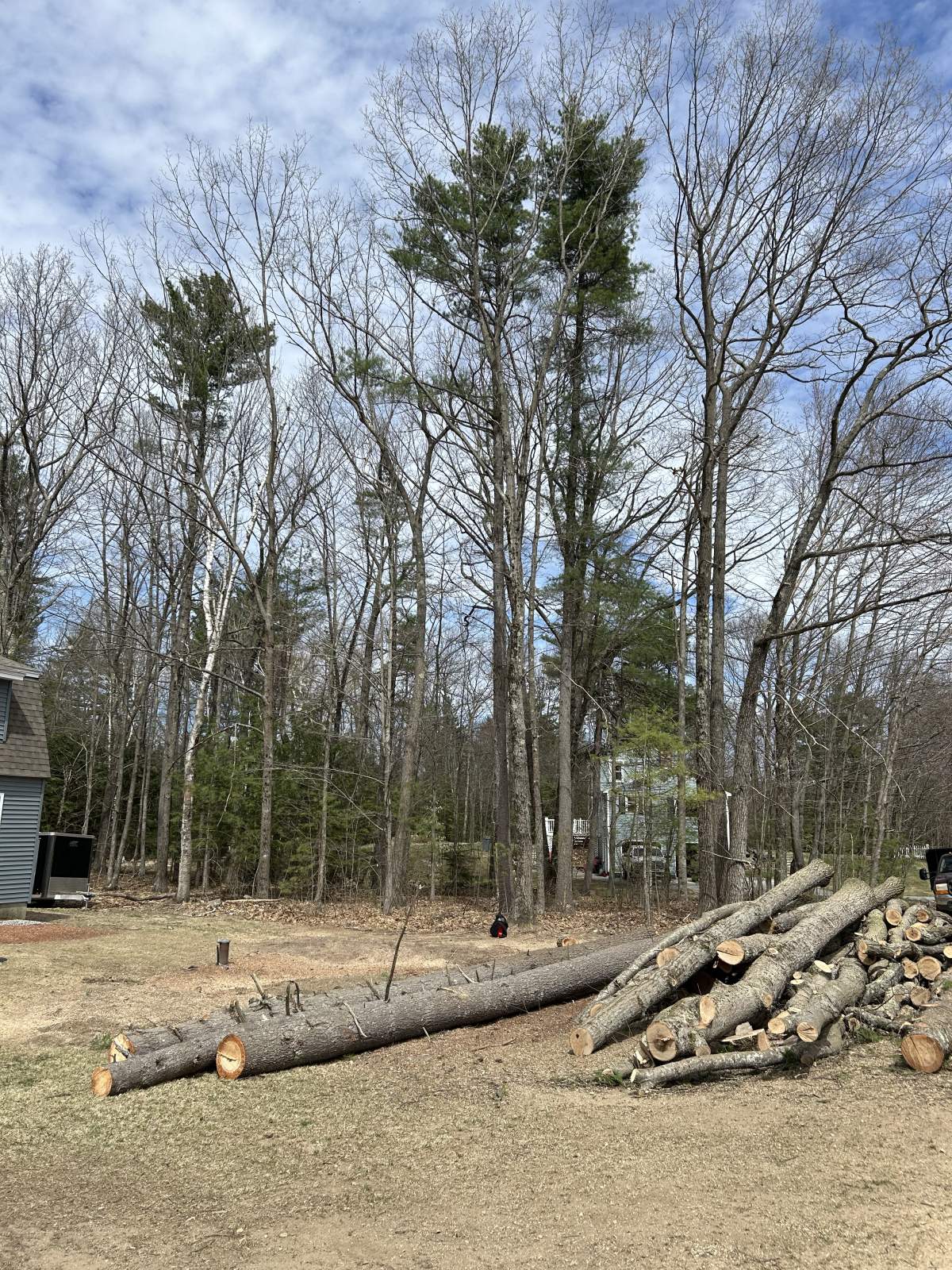
- Debris processing: Chipping brush, bucking logs into manageable rounds, and hauling material away or leaving firewood if requested.
- Final cleanup: Raking the site, removing sawdust, and leaving the property tidy so the only sign we were there is the missing tree.
Equipment and Technical Considerations
The tools we bring to a Manchester removal depend entirely on the scope of the job. For a modest backyard tree, chainsaws and a wood chipper may be all that is required. For large or hazardous specimens, we rely on aerial lifts, cranes when access allows, and heavy-duty rigging systems rated well above the loads they carry. Rope diameter, block placement, and friction devices are all selected based on the weight of the sections being lowered, because a miscalculation with several hundred pounds of green wood can cause serious damage.
Ground conditions matter just as much as the tree itself. Wet or soft soil affects how equipment can be positioned, and narrow city lots often mean we must work vertically rather than spreading out. We account for the weight of our machinery on driveways and lawns, using mats and careful routing to avoid rutting turf or cracking pavement. These technical details are invisible to most property owners, but they are the difference between a clean job and a costly mistake.
Common Removal Scenarios Around Manchester
Manchester properties present a wide range of removal challenges. In older neighborhoods with mature canopies, we frequently take down large deciduous trees whose roots have begun heaving sidewalks or whose limbs overhang roofs. Along the city’s more wooded edges toward Bedford and Auburn, we deal with tall pines that have grown too close to homes or been weakened by wind and ice. Commercial and multi-family properties often need removals to maintain sightlines, clear parking areas, or eliminate liability from declining trees near walkways.
Storm damage generates a steady stream of urgent removals as well. When a tree splits, uproots, or drops a major limb onto a structure, the situation calls for both speed and caution. We stabilize the immediate hazard, then work methodically to remove the compromised tree without causing further harm. Because we also handle stump grinding, tree trimming, landscaping, and lawn care, we can restore a property fully after a removal rather than leaving you with a stump and torn-up ground to deal with on your own.
Why Property Owners Choose 603 Yard & Tree Service LLC
Removing a tree well means protecting everything around it, and that is a standard we hold on every job. Our crews treat your home, your landscaping, and your neighbors’ property as if they were our own, and we clean up thoroughly when the work is finished. As a company rooted in the region, we understand the local tree species, the soil, and the seasonal conditions that shape how removals should be approached in southern New Hampshire.
Beyond removals, 603 Yard & Tree Service LLC offers a full range of services including tree trimming, landscape design, hardscaping, and both residential and commercial lawn care throughout Manchester. That breadth means a single call can address not only the tree that needs to come down but the overall health and appearance of your property. When you are ready to discuss a removal or simply want an honest assessment of a tree you are concerned about, we are here to help.